


Infrastructure, and the run-book that comes after it
Getting a service onto AWS is a day's work. Making it something a small team can operate at 2am — deploy, roll back, find the failing job, restore the database — is the part that decides whether the platform is an asset or a liability.
Concrete deliverables, not adjectives
- Containerised deployment
- Services packaged as images and run on managed compute, so the artefact that passed CI is the artefact in production, and scaling is a number rather than a migration.
- Delivery pipelines
- Build, test, migrate, deploy, and a rollback that is one action. If shipping requires a person to remember a sequence, the sequence is the bug.
- Environment separation
- Development, staging and production with separate data, separate credentials and separate blast radius — including for the third-party services that charge real money when a test loop misfires.
- Backup and restore
- Automated backups, and — the part usually skipped — a restore that has actually been performed. A backup nobody has restored is a hypothesis.
The parts a demo doesn't show
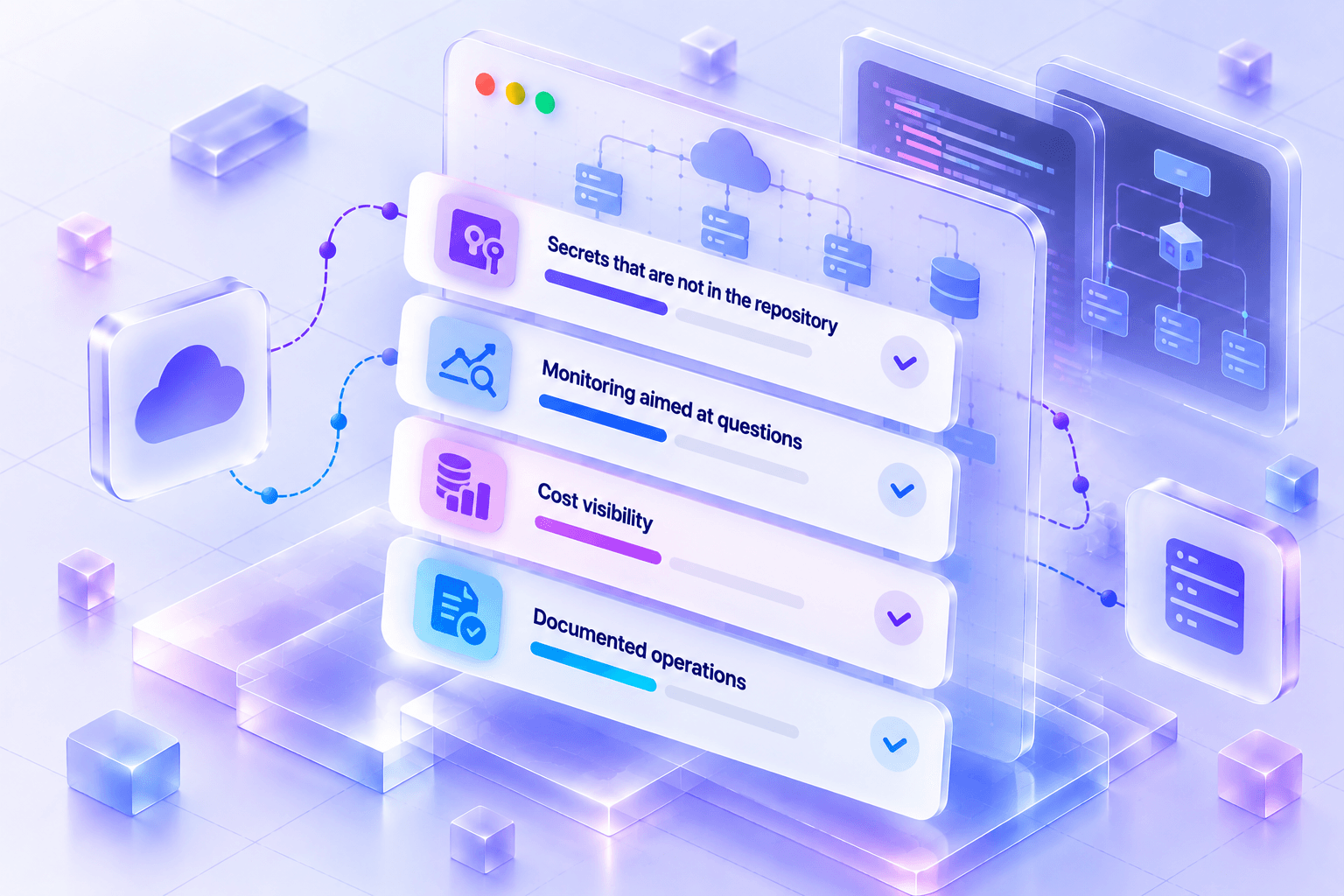
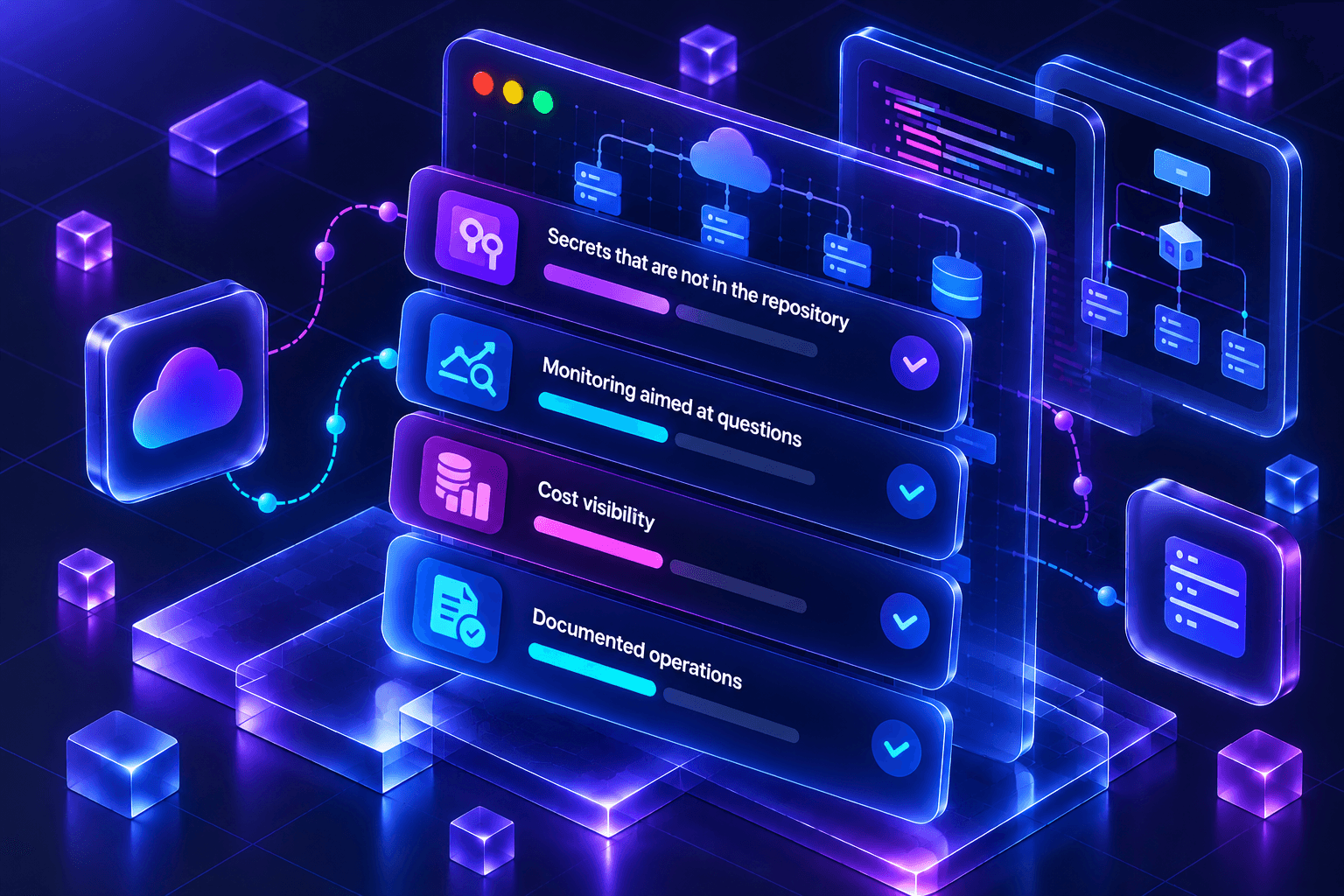
- Secrets that are not in the repository
- Configuration through the platform's secret store, injected at runtime, rotated without a redeploy. No credential ever lands in version control.
- Monitoring aimed at questions
- Dashboards built around the questions you will actually ask — is the queue draining, are deliveries failing, which tenant is affected — rather than a wall of default metrics.
- Cost visibility
- Tagged resources and a clear picture of what each part of the platform costs, so architectural decisions can be made with the bill in view.
- Documented operations
- A written run-book: how to deploy, how to roll back, how to rotate a key, who to call at the provider. Handed over, not held.
The order things actually happen in
Audit what exists
Inventory of services, data stores, credentials, scheduled work and third-party dependencies. Undocumented infrastructure is the norm, not the exception.
Containerise and reproduce
Get the application running identically on a laptop and in a pipeline. Everything after this is much cheaper once it is true.
Automate the path to production
Pipeline, migrations, health checks, rollback. Then deploy through it repeatedly until it is boring.
Hand over the keys
Run-book, dashboards, alerts and a walkthrough with the people who will be on call. An engagement that ends without this has not ended.
The stack, and why each piece is in it
- Compute
- AWS ECS · Fargate · LambdaLong-running services on ECS with Fargate so there is no fleet to patch; Lambda for event-driven work that is idle most of the day.
- Data and storage
- Amazon RDS · DynamoDB · S3 · RedisManaged Postgres or MySQL for relational data with backups handled by the platform; S3 for media and exports; Redis for queues and short-lived state.
- Messaging and mail
- Amazon SNS · SES · queue workersFan-out and transactional mail through managed services rather than a server nobody wants to own, with the sending reputation treated as production infrastructure.
- Pipeline and packaging
- Docker · CI/CD · infrastructure as codeEnvironments defined in files under review, so rebuilding one is a run rather than an archaeology project.
See it, don’t take our word for it
NexBroad-Reachis built by this team, on this stack, and it’s running live — open the product instead of a screenshot of it.
SaaS development
Most SaaS products are easy to demo and hard to operate. The parts that decide whether a product is still maintainable eighteen months in — tenancy, roles, billing, background work, audit — are the parts we build first, because retrofitting them is what stalls a product.
Web development
A marketing site and an operations console are not the same problem, and building them the same way is how one of them ends up slow. We pick the rendering model per surface, then hold the line on payload, accessibility and the states nobody demos.
Tell us what you want built
A short brief is enough to start — what you're trying to do, and roughly for whom. We'll tell you honestly whether it's a fit.